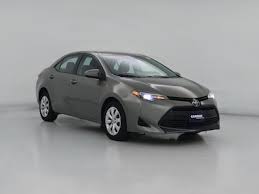
Mohamed from Muscat had been doing his homework for about six weeks before he placed his order with us. He'd worked through every article in our Corolla export series — the best years to buy, hybrid vs petrol cost comparisons, the common problem areas, maintenance budgeting, trim comparisons, the whole lot. By the time he reached out, he had a spreadsheet, a list of very specific questions, and a clear sense of what he wanted: a 2022 Corolla Hybrid SE, under 45,000km, white or silver, full Toyota dealer service history, battery SoH above 88%, and a FOB price under $16,500. He found exactly that vehicle in our inventory within eight days of inquiry. Three months after the car arrived in Muscat, he sent us a message saying it had been one of the smoothest large purchases he'd ever made, and that the preparation had made all the difference.
That story is actually not that unusual for buyers who do the reading first. What's more common, unfortunately, is buyers who jump straight to price negotiations without having worked through the fundamentals — what year actually makes sense, what the total cost of ownership looks like over five years, what documentation to demand, what the red flags are that should stop a deal cold. They sometimes get lucky. More often they end up with a car that technically works but doesn't quite fit their situation, or they pay more than they needed to, or they encounter a problem they could have screened for in advance.
This article is the final piece in our Corolla export series at Panda Used Cars. Think of it as the master checklist — the document that pulls everything together so that when you're ready to buy, you have a single structured framework to run through before you commit. If you've read the previous articles in this series, much of what follows will click into place as a synthesis. If this is your entry point, it will still give you everything you need to make a sound decision.
The Ultimate Pre-Purchase Checklist
Step 1: Decide Your Budget, Usage & Market Realities
Before you start looking at specific cars, anchor the decision in your actual numbers. Total landed cost is what matters, not FOB price alone. For most export markets in 2026, a 2021–2023 Corolla LE will land at $15,000–$20,000 all-in depending on origin spec, freight route, and local import duties. A Hybrid SE in equivalent condition lands at $18,000–$23,000. Those ranges shift meaningfully by destination — European import duties and compliance costs push numbers higher, while some East African markets have more favorable tariff structures for vehicles under certain engine displacement thresholds.
Beyond purchase price, map out your annual running cost expectations honestly. A Corolla running 25,000km per year in urban traffic costs roughly $1,800–$2,400 annually in fuel on a petrol spec at current regional fuel prices, versus $1,100–$1,500 for the Hybrid. Maintenance, insurance, and registration vary by market but factor them into your five-year ownership picture before deciding how much vehicle you can afford upfront.
Also be clear about usage. A taxi fleet operator in Kampala has genuinely different requirements from a family in Düsseldorf. High-mileage commercial use favors simplicity and low parts cost. Family use favors comfort features and resale quality. Getting this wrong at the foundation affects every subsequent decision.
Step 2: Choose the Right Year, Trim & Powertrain
For 2026 export buyers, the sweet spot in the Corolla lineup sits between 2020 and 2023 model years. The 2020+ cars all carry Toyota Safety Sense as standard equipment, which matters for insurance costs and resale in more developed markets. The 2022 and 2023 units represent the best balance of age, mileage, and price for most buyers — old enough to have depreciated meaningfully from new, recent enough to avoid the higher-mileage risk that comes with pre-2019 stock.
On trim, the LE is the right choice for budget-conscious buyers and high-utilization applications. The XLE earns its premium for comfort-driven buyers and markets where interior quality translates directly into resale value. The Hybrid SE makes the strongest financial case in markets where fuel prices are $1.50 per liter or higher, provided hybrid service infrastructure is accessible in your region.
On powertrain, if you're uncertain between petrol and hybrid, the most important question is whether Toyota-qualified hybrid technicians operate in your city. In Nairobi, Dubai, Amsterdam, and most Gulf capitals, the answer is yes. In smaller secondary cities across East Africa or some parts of the Middle East, the answer may be no, which makes the petrol powertrain's simplicity a genuine practical advantage rather than a compromise.
Step 3: Understand 5-Year Total Cost of Ownership
This step alone filters out a lot of bad decisions. Run the numbers on your specific use case. A 2022 Corolla LE petrol purchased at $13,000 FOB and driven 20,000km annually in Kenya will accumulate approximately $9,500–$11,000 in fuel and routine maintenance costs over five years. The equivalent Hybrid SE at $16,000 FOB with lower fuel consumption will accumulate roughly $6,500–$8,000 in operating costs over the same period. The hybrid's $3,000 purchase premium is more than offset by operational savings within three to four years.
The calculation shifts in low-fuel-cost markets. In parts of the Middle East where petrol remains subsidized, the fuel savings advantage narrows and the petrol LE's simplicity and lower upfront cost becomes more competitive. Know your local fuel price before running this math.
Also factor in the eventual resale. In export markets where Hybrid demand is growing — Europe, UAE, increasingly East Africa — the Hybrid holds value approximately 10–15% better than the equivalent petrol at the four-to-five year mark. That's not nothing when you're doing a full ownership calculation.
Step 4: Verify Battery Health & Common Problem Areas
For any Corolla Hybrid, battery state of health is the single most important technical verification you can make. A battery SoH below 80% is a red flag. Below 75% and you're looking at a replacement cost of $1,800–$3,500 in most markets, which fundamentally changes the ownership economics. Request OBD2 diagnostic data showing current SoH percentage as part of your pre-purchase inspection. Any seller who can't or won't provide this on a hybrid vehicle is not a seller you should be working with.
For petrol models, the main inspection areas are timing chain condition (listen for rattle on cold start), transmission smoothness across the full RPM range, suspension bushings and strut condition (particularly on high-mileage units), and electronic system functionality including the Safety Sense sensors. Check all windows, all locks, the air conditioning compressor engagement, and any infotainment-related features specific to the trim.
On any Corolla regardless of powertrain, examine the undercarriage for rust formation, check for accident repair evidence in the door gaps and panel alignment, and confirm that the VIN plates are consistent across the dashboard plate, door jamb sticker, and engine bay.
Step 5: Demand Proper Documentation & Inspection Standards
A legitimate used Corolla being exported from China should come with a verifiable service history, a third-party inspection report from a recognized inspection company, the Chinese title document (行驶证 and 车辆合格证), and clear documentation of any accident history. Odometer verification against service records is essential — discrepancies between claimed mileage and service record intervals are a warning sign that should stop the transaction.
For export purposes, confirm whether the seller is providing a clean title transfer and export clearance documentation. Verify that the vehicle has been properly deregistered from Chinese plates and that export customs declarations are in order. If you're handling shipping independently, confirm the port of loading and ensure your freight forwarder has all required documentation at least two weeks before scheduled loading.
Step 6: Shipping & Logistics Checklist
The RoRo vs container decision comes down primarily to cost versus control. RoRo is cheaper — typically $800–$1,400 for East Africa or Middle East routes — but the car is exposed during loading, transit, and discharge. Container shipping at $1,200–$2,200 provides better protection against minor transit damage and allows you to ship personal items in the container with the vehicle where destination customs rules permit.
For buyers in European markets, factor in compliance requirements. Many European ports require vehicles to meet specific emissions standards for registration, and while Corolla 2020+ generally meets Euro 6 equivalents, confirming compliance for your specific registration region before purchase is essential, not optional.
Confirm your freight forwarder's track record with vehicle shipments specifically, get a fixed-rate quote rather than an estimate, and establish who is responsible for marine insurance coverage and at what declared value.
Step 7: Customs & Post-Arrival Checklist
Before your car arrives, have your import agent or customs broker confirm the applicable duty rate for your market. Corolla import duties vary from roughly 0% in some Gulf states under JAFZA free zone frameworks, to 25% in Kenya under COMESA schedules, to structured VAT-inclusive rates across EU markets. Getting this number wrong at the planning stage has derailed more than a few purchases we've seen from buyers working independently.
On arrival, inspect the vehicle against your pre-shipment photos before signing any release documentation. Note any new damage from transit, photograph everything, and file a marine insurance claim immediately if damage is evident. Do not accept the vehicle under protest and then try to claim later — the claim process is significantly cleaner if you document damage at point of receipt.
After clearing customs, take the car directly to a Toyota dealer or qualified independent for a full post-arrival inspection. Confirm everything you were promised is intact. Register the vehicle within the legally required window in your jurisdiction.
Red Flags That Should Make You Walk Away
There are a handful of situations where the right decision is simply to stop the transaction, regardless of how attractive the price appears.
A seller who cannot produce a third-party inspection report or refuses an independent inspection is a fundamental problem. A Hybrid SE with a battery SoH below 78% being sold at "normal" market pricing — without the battery condition being disclosed and factored into the price — is either ignorance or concealment, neither of which is acceptable. Odometer readings that don't align with service record timestamps suggest tampering. Structural repair evidence in panel gaps, mismatched paint codes, or uneven weld lines in the engine bay area indicate a car that has had significant accident damage inadequately disclosed.
On the logistics side, a freight forwarder who cannot provide references for completed vehicle shipments, or who asks for full payment before issuing a bill of lading, should be avoided without exception. Freight scams targeting first-time international vehicle buyers are real and they follow predictable patterns. The protection against them is always documentation and traceable payment structures.
A seller who pressures urgency — "another buyer is ready today, you need to decide now" — is using a tactic that works on some buyers precisely because it short-circuits the verification process. Legitimate sellers and legitimate vehicles can wait for proper due diligence. If a deal can't survive a 48-hour verification window, that itself tells you something important.
Final Decision Framework – Which Corolla Is Right for YOU?
Run through these questions in order. Your answers will point you to a specific configuration without ambiguity.
What is your total budget, landed in-country? If it's under $17,000, the LE petrol is your starting point. Between $17,000 and $22,000, the Hybrid SE becomes genuinely competitive. Above $22,000, the XLE or Hybrid XLE deserves consideration.
What is your primary use? High-mileage commercial or fleet use points to the LE or Hybrid LE for simplicity and operating cost. Personal family use points to the XLE for comfort. Urban commuting with fuel cost sensitivity points to the Hybrid SE.
What is your fuel price environment? Under $1.00 per liter, the hybrid premium is harder to recover. Between $1.20 and $1.50, the hybrid makes sense on a five-year view. Above $1.50, the Hybrid SE is the financially obvious choice.
Do Toyota hybrid-qualified technicians operate in your city? Yes — buy the hybrid confidently. No or uncertain — the petrol LE or XLE is the safer operational bet, even if the hybrid looks better on paper.
The answers to those four questions, honestly given, will tell you exactly which Corolla to buy.
How Panda Used Cars Helps You Complete This Checklist
Our process maps directly onto what we've outlined above. When a buyer contacts us, we start with the usage profile and market questions before we discuss specific vehicles. It prevents the common situation where a buyer falls in love with a specific unit that turns out to be wrong for their context.
A buyer from Accra came to us last year with a budget of $18,500 landed. He'd done his homework and was fixated on a 2022 Hybrid SE. When we worked through the logistics, Ghana's import duty structure at the time added roughly $1,800 more than he'd calculated, pushing total landed cost past his realistic number. We recalibrated to a 2021 Corolla LE with 38,000km — cleaner service history, lower purchase price, well under his landed budget — and he told us six months later it had been exactly the right call. He even found a buyer for it at a healthy profit when he relocated.
On the Hybrid side, we sourced a 2023 Corolla Hybrid SE for a buyer in Rotterdam earlier this year — battery SoH of 93%, full dealer history, under 28,000km, arrived in Rotterdam in 26 days from order confirmation. He'd read our complete series and came to us with an essentially complete checklist already filled out. The transaction took less than two weeks from first contact to payment.
Our current Corolla inventory at Panda Used Cars includes 2020–2024 LE units starting from $11,200 FOB, XLE units in strong condition from $14,500 FOB, and Hybrid SE units with verified SoH data from $15,000 FOB. Stock turns over regularly — the specific units listed today may be gone next week, but we're sourcing consistently across all three trims. Full condition notes, mileage verification documentation, and inspection reports are available for every unit we offer.
You can browse current availability on our Toyota Corolla export listings page, or reach out directly if you want us to source a specific specification.
You've Done the Work — Now Make It Count
If you've read through this series, you know more about buying a Corolla from China than 90% of the buyers who attempt this process every year. The checklist above is the structured version of everything we've covered — use it as a literal reference document when you're evaluating a specific vehicle and seller, not just background reading.
Start by checking our current Toyota Corolla export inventory for vehicles that match your profile. If nothing in current stock fits exactly, contact us through Panda Used Cars and give us your specification — we source to order, and for a buyer who knows what they want, the match is usually faster than you'd expect.
The right Corolla, properly sourced and properly documented, is a vehicle that will serve you well for years. Panda Used Cars has been putting those cars in front of buyers across thirty-plus countries, and this checklist is the framework we use every day to make sure the match is right.
Get Your Toyota Corolla Quote Today
Tap to instantly start WhatsApp conversation:
Russian WhatsApp → +86 166 9606 8752English WhatsApp → +86 176 3812 8770
Email: [email protected]
Fast, secure, and cost-effective export of premium Toyota vehicles – contact us now for exclusive pricing and availability.
Related Reading:
- 2026 Best Used Toyota Corolla Years to Buy – The Ultimate Export Guide from China (published)
- Toyota Corolla Hybrid Export from China 2026 – Complete Guide: Costs, Process, Real Fuel Economy & Buying Tips (published)
- Toyota Corolla vs Honda Civic: Which Is the Better Export Car from China in 2026? (published)
- How to Import a Used Toyota Corolla from China in 2026: Step-by-Step Guide (published)
- Toyota Corolla Hybrid vs Petrol: 5-Year Cost of Ownership Comparison for Export Buyers in 2026 (published)
- Hybrid Battery Life & Maintenance: What Export Buyers Need to Know (published)
- Common Problems with Used Toyota Corolla from China in 2026 – And How to Avoid Them (published)
- Toyota Corolla Maintenance Cost Guide: What Export Buyers Should Budget in 2026 (published)
- Toyota Corolla LE vs XLE vs Hybrid SE: Which Trim Is Best for Export Buyers in 2026? (published)
- Ultimate Buyer's Checklist: Everything You Need to Know Before Importing a Toyota Corolla from China in 2026 (published)