James bought his first Toyota Corolla Hybrid through us in early 2022. He runs a small executive transfer business in Nairobi — four cars, airport runs mostly, decent mileage every month. When we first spoke, he spent about 20 minutes asking about the battery before he asked anything else. Would it cope with Nairobi heat? What if it failed outside warranty? Could he find a mechanic who knew what to do with it? He wasn't being unreasonable — he was being smart. He'd heard secondhand stories about hybrid batteries failing in tropical climates, and he didn't want to find out the hard way.
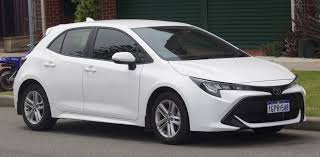
Three years later, James called to order two more Hybrids. His original car had done just over 118,000km with zero battery-related issues, his fuel costs were running roughly 35% below what he'd spent running a petrol Corolla on the same routes, and his mechanics in Nairobi had serviced the car without any specialist equipment beyond a basic battery health reader.
James's story isn't unusual. It's actually pretty representative of what we see across our export customer base in East Africa, the Middle East, and Europe. But the anxiety he had in 2022 is still the first thing most buyers raise in 2026 — and that's understandable, because the battery is genuinely the component that makes a Hybrid different, and different things feel like risks until you understand them properly.
At Panda Used Cars, we export Toyota Corolla Hybrids in volume and we deal with battery questions daily. This article is the honest, detailed answer we give to buyers who want to understand what they're actually getting before they commit.
How Toyota Corolla Hybrid Battery Actually Works
The Corolla Hybrid uses Toyota's THS II — Toyota Hybrid System second generation — which has been in production and continuous refinement since the early 2000s. By the time you're looking at a 2021–2024 model year unit, this is a technology platform with over two decades of real-world refinement behind it. That matters, because the engineering decisions Toyota made around battery management are a direct product of lessons learned from millions of vehicles in service across varied climates.
The battery itself is a nickel-metal hydride (NiMH) pack positioned under the rear seat. It's not a large high-voltage battery the way a full EV's battery is — its primary job is to store and release energy in short cycles, working in coordination with the petrol engine rather than replacing it. The system is designed so the battery is almost never fully charged or fully depleted during normal operation. Toyota's battery management software keeps the pack cycling between roughly 40–80% of its maximum charge capacity, which is the single most important factor in NiMH battery longevity. Deep discharge and high-temperature overcharge are the two things that degrade these batteries fastest, and the THS II system is specifically engineered to avoid both.
When you decelerate or brake, the electric motor acts as a generator and captures kinetic energy back into the battery — this is the regenerative braking element. When you accelerate from rest or cruise at low speed, the battery supplements or substitutes for the petrol engine, reducing fuel consumption and engine wear simultaneously. The system manages all of this automatically; there's nothing the driver needs to do differently from driving a conventional car.
The practical implication for a buyer is that the battery in a Corolla Hybrid is not under the kind of stress that early hybrid skeptics assumed. It's not being asked to power the car alone — it's being asked to assist, and the depth of each charge cycle is deliberately limited to protect longevity.
Real Battery Life Expectancy in Export Conditions
2021–2023 vs 2024–2025 Model Years
Among the 2021–2023 Corolla Hybrids we currently source and inspect, battery State of Health (SoH) readings across our recent inventory have ranged from 78% to 94% depending on mileage, service history, and previous operating conditions. Vehicles with 40,000–70,000km and documented service history consistently come in above 85% SoH, which is the benchmark we require before export approval. Units that have spent significant time in stop-and-go urban traffic with proper servicing often test better than highway-heavy vehicles at comparable mileage, because the regenerative braking cycles actually help keep the battery active and healthy.
The 2024–2025 model years arrive with factory-fresh battery condition and haven't yet accumulated the mileage profile that produces meaningful SoH variance. These units command higher prices but offer the longest remaining battery life by definition. If your budget allows and you're planning a long ownership period, starting with a 2024 unit makes the battery longevity question largely academic for the first several years.
Climate Performance — Hot Markets vs Temperate Climates
Heat is the legitimate concern in this conversation, and it deserves a straight answer. Sustained high ambient temperatures do accelerate NiMH battery degradation over time — this is physics, not marketing spin. What the data from our export customers and from Toyota's published reliability records shows, however, is that the degradation rate in hot climates like UAE, Kenya, or Nigeria is meaningful but manageable, not catastrophic.
In East Africa and Middle East operating conditions, a well-maintained Corolla Hybrid battery typically retains above 80% SoH at 150,000–180,000km. In European climates, where temperatures are more moderate, the same vehicle under similar mileage conditions tends to retain slightly higher SoH — typically 83–88% at that mileage range. The difference is real but not dramatic enough to fundamentally change the ownership economics.
What does matter in hot climates is avoiding prolonged exposure to direct sun with the vehicle parked and the thermal management system inactive. Parking in shade or covered facilities makes a measurable difference over years of ownership. James in Nairobi covers his cars when they're not in service — a simple habit that his mechanics told him was worth keeping.
Expected Lifespan in Normal Use
Under normal operating conditions — regular servicing, reasonable mileage, no extreme abuse — a Corolla Hybrid battery sourced with a healthy SoH reading should comfortably reach 200,000–250,000km without requiring replacement. Toyota's published data and the real-world experience we track across our customer base supports this range. In temperate climates with lower annual mileage, 15+ years of service from the original battery is not unusual. In high-mileage tropical applications, 8–12 years is a more realistic expectation.
That expected lifespan, set against the concerns we hear from buyers every week, is almost always more reassuring than people anticipate.
Maintenance & Cost Guide for Corolla Hybrid Battery
Day-to-Day Maintenance
The honest answer here is that the Corolla Hybrid battery requires almost nothing from the owner in day-to-day use that a petrol car doesn't also require. The battery management system handles charging cycles, temperature management, and load balancing automatically. The most important thing an owner can do is maintain the rest of the car properly — specifically, keeping the cooling system that serves the hybrid components in good condition, and not ignoring warning lights.
The battery pack has a dedicated cooling duct and fan. Keeping that intake vent (typically located under the rear seat or in the boot area) clear of dust, debris, and obstructions is important, particularly in dusty markets like UAE and parts of East Africa. A blocked battery cooling vent in a hot climate is one of the few scenarios that genuinely accelerates battery degradation, and it's entirely preventable.
Battery Health Checks — Frequency and Cost
We recommend buyers request a battery SoH assessment annually or at every 30,000km service interval, whichever comes first. This isn't a complex or expensive procedure. A Toyota-trained technician with a suitable diagnostic tool — the Techstream software that Toyota dealers use, or compatible equivalents that are increasingly available in independent garages in Nairobi, Kampala, Dubai, and major European cities — can produce an SoH reading in under 20 minutes.
Cost varies by market: in Nairobi, expect to pay KES 1,500–3,000 ($12–23 USD) for a standalone hybrid battery health check at an independent garage. In Dubai, AED 150–300 ($40–82 USD) at a Toyota-experienced independent workshop. In Germany or UK, €50–€120 at independent hybrid specialists. Annual battery health monitoring is one of the lowest-cost, highest-value maintenance habits a Corolla Hybrid owner can have.
Battery Replacement Cost in 2026
This is the number everyone wants to know. A full OEM Toyota replacement hybrid battery for the 2021–2024 Corolla Hybrid, including installation at an authorized dealer, runs approximately $2,200–$3,200 in most markets depending on local dealer pricing and currency. Quality compatible aftermarket batteries from reputable suppliers are available at $1,200–$1,800 installed in many markets, including through Toyota-experienced independent workshops.
The context that makes this number more digestible: a properly sourced Hybrid with SoH above 85% at the time of purchase is unlikely to need a battery replacement within the first five years of your ownership. If it does need replacement at year seven or eight with 180,000km on the clock, you're looking at a one-time cost that the vehicle's cumulative fuel savings will have exceeded by a considerable margin.
Warranty and Post-Export Coverage
Toyota's factory hybrid battery warranty in the original market is typically 8–10 years or 160,000km. Once a vehicle is exported and re-registered in a new market, that manufacturer warranty generally doesn't transfer. This is a standard condition across the used car export industry and applies to petrol vehicles equally — it's not a Hybrid-specific issue. What it means practically is that you're self-insuring after import, which is why buying from an exporter who has done a thorough pre-export battery inspection matters.
Some importers in Kenya, UAE, and European markets now offer their own mechanical warranty products that cover hybrid battery systems for 12–24 months post-purchase. These are worth investigating through your local importer.
Common Battery Concerns & Real Solutions
The Mileage Fraud Question
Odometer manipulation on used cars from China is a real concern, and it's relevant to battery health because a battery from a car that has actually done 180,000km doesn't read the same as one from a genuine 60,000km vehicle — regardless of what the odometer shows. The reassuring news is that battery SoH testing provides an independent cross-check on odometer readings. A battery showing 91% SoH is inconsistent with a car that's done genuine high mileage in harsh conditions. When SoH readings and odometer figures don't align, that's a flag that experienced inspectors know to pursue. We cover this as part of our pre-export inspection process.
Managing Heat — Practical Tips for Tropical Markets
Beyond keeping the battery cooling vent clear, the practical advice for buyers in hot climates: avoid leaving the vehicle parked in direct sun for extended periods where possible, particularly during the hottest months. When the car is in regular use, the thermal management system handles everything; it's extended periods of inactivity in high ambient heat that stress the battery most. If you're storing a vehicle for more than three to four weeks, park it in shade and start it every 10–14 days to allow the battery management system to run a conditioning cycle.
Reading a Battery SoH Report
SoH — State of Health — is expressed as a percentage of the battery's original design capacity. A new battery is 100%. A battery at 85% SoH retains 85% of its original energy storage capacity. In practical terms, an 85% SoH Corolla Hybrid battery will produce marginally reduced electric assist range and fractionally higher fuel consumption compared to a new battery — the difference in real-world fuel economy is typically 3–7%, not dramatic. Below 75% SoH, you'll notice more meaningful reductions in fuel economy and electric assist. Below 70%, replacement starts making financial sense.
When reviewing a SoH report, also check the individual cell balance data if it's available — a battery where most cells are healthy but one or two are degraded significantly is a potential failure risk even if the overall SoH figure looks reasonable.
How Panda Used Cars Handles Battery Anxiety
Every Corolla Hybrid we prepare for export goes through a dedicated hybrid system inspection before anything else. That means a full Techstream battery diagnostic to establish SoH and individual cell data, a thermal management system check to confirm the cooling fan and ductwork are functional, and a road test specifically to verify regenerative braking behavior and electric motor response under load. Any unit that comes in below 82% SoH doesn't go into our export inventory. We set that threshold conservatively because we know buyers are relying on those numbers to make real financial decisions.
A buyer from Lagos contacted us in early 2025 looking for a fleet addition — he wanted a 2022 Corolla Hybrid but had been quoted a unit by another exporter with no battery documentation at all. He came to us specifically because he wanted the SoH data before committing. We sourced a 2022 unit with 54,000km, SoH at 89%, full Toyota service history, and sent him the battery report as part of the preliminary documentation package before he paid a deposit. He's had the car in service for over a year now with no issues and has since referred two other buyers.
At the time of writing, our active Corolla Hybrid export inventory includes 16 units across 2021–2024 model years, with SoH readings ranging from 83% to 93%. Mileage ranges from 28,000km to 81,000km. Every listing includes the battery health report in the documentation package. You can review what's currently available at the Panda Used Cars Toyota Corolla page, or browse the full current inventory across all models at the Panda Used Cars homepage.
Where This Leaves You
The Toyota Corolla Hybrid battery is not the fragile, expensive liability that some buyers fear. It's a mature technology in a proven application, engineered by a company that has been refining it for over twenty years. The concerns worth taking seriously — heat management in tropical climates, pre-export battery SoH verification, understanding what replacement costs look like — all have clear, practical answers. None of them make the Hybrid a worse choice than petrol for most export buyers who plan to own for four or more years at reasonable mileage.
What you need is accurate information before you buy, not reassurance after. The battery report should be part of your pre-purchase documentation, the same way you'd want a mechanical inspection on any used vehicle. If the exporter you're talking to can't provide SoH data, that's your answer about how carefully they've inspected the car.
If you want to see current Corolla Hybrid stock with full battery documentation, or if you have specific questions about battery condition on a unit you're considering, the right starting point is Panda Used Cars Toyota Corolla inventory. Alternatively, visit Panda Used Cars directly to browse all available Hybrid listings and request documentation on any specific unit.
Get Your Toyota Corolla Quote Today
Tap to instantly start WhatsApp conversation:
Russian WhatsApp → +86 166 9606 8752English WhatsApp → +86 176 3812 8770
Email: [email protected]
Fast, secure, and cost-effective export of premium Toyota vehicles – contact us now for exclusive pricing and availability.
Related Reading:
- 2026 Best Used Toyota Corolla Years to Buy – The Ultimate Export Guide from China (published)
- Toyota Corolla Hybrid Export from China 2026 – Complete Guide: Costs, Process, Real Fuel Economy & Buying Tips (published)
- Toyota Corolla vs Honda Civic: Which Is the Better Export Car from China in 2026? (published)
- How to Import a Used Toyota Corolla from China in 2026: Step-by-Step Guide (published)
- Toyota Corolla Hybrid vs Petrol: 5-Year Cost of Ownership Comparison for Export Buyers in 2026 (published)
- Hybrid Battery Life & Maintenance: What Export Buyers Need to Know (published)