Hassan runs a small private hire fleet in Dubai — six cars, three drivers, and the kind of meticulous records that would make an accountant happy. In mid-2024, he imported two Corollas through us at roughly the same time: one 2022 Corolla 1.8L petrol, one 2022 Corolla Hybrid. Same model year, similar mileage out of China, similar landed cost after shipping and UAE import duties. He wanted a real-world comparison on his own terms, not somebody else's projections.
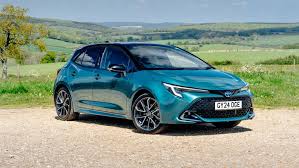
Six months later he sent us a message. His per-kilometer fuel cost on the Hybrid was running at approximately 38% lower than the petrol unit in Dubai traffic, and the Hybrid had required zero unscheduled maintenance in that period while the petrol car had needed a new set of brake pads. He's since ordered three more Hybrids.
Hassan's comparison wasn't scientific, but it rhymes closely with the numbers we've accumulated across years of export experience and buyer feedback. And it points to the central question that more buyers are asking in 2026: when you account for everything over five years — fuel, maintenance, insurance, registration, and eventual resale — which version of the Corolla actually costs less to own?
The purchase price is just the opening bid. The five-year total is the real number. With fuel prices structurally higher across most export markets, inflation compressing household budgets, and Hybrid resale premiums widening in markets like Kenya, UAE, and Germany, this calculation matters more than it did even three years ago. At Panda Used Cars, we export both versions in volume and we've been running these numbers for buyers across different markets long enough to give you a clear, honest breakdown.
Why 5-Year Cost of Ownership Matters More Than Purchase Price
The instinct to focus on purchase price is understandable. It's the number you negotiate, the number on the invoice, the number that determines whether you can afford to proceed at all. But for a vehicle you're going to use daily for five years, purchase price typically represents somewhere between 30–45% of total ownership cost. The rest is what happens after the car arrives.
This is especially true in export markets. A buyer in Nairobi or Dar es Salaam isn't just paying for the car — they're paying for fuel at prices that fluctuate with currency and global supply, maintenance at local workshop rates, insurance premiums that factor in vehicle value, and eventually a resale price that reflects what the local market has decided the car is worth. All of those variables are different for the Hybrid and petrol versions, and they compound over time.
The buyer who goes with the cheaper petrol Corolla at the outset and drives 35,000km per year in stop-and-go city traffic may well spend more money over five years than the buyer who paid $1,500 more upfront for the Hybrid. That's not a speculation — it's arithmetic, and we'll walk through it in detail.
Head-to-Head 5-Year Cost Breakdown
Upfront Purchase Price + Export Costs
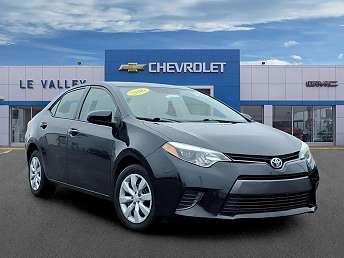
Starting with China acquisition costs in 2026 market conditions. A 2022–2023 Corolla 1.8L petrol in good export condition — 40,000–70,000km, service history intact, clean documentation — is currently trading in the $11,500–$14,500 range at source in China. The equivalent 2022–2023 Corolla Hybrid runs $13,500–$16,500, depending on mileage, trim level, and battery SoH reading.
Add export costs — freight to Mombasa or Jebel Ali in 2026 runs approximately $900–$1,400 per vehicle depending on shipping method and route, plus port handling, documentation, and customs duties that vary by destination — and you're looking at a landed cost difference of roughly $1,500–$2,500 more for the Hybrid in most scenarios. Call it $2,000 as a working figure for this comparison.
That's the gap you need the Hybrid's operational savings to close and exceed over five years. Let's see if it does.
Fuel Costs
This is where the Hybrid's advantage becomes substantial, and the size of the advantage depends heavily on your market and your driving pattern.
The 2022–2023 Corolla 1.8L petrol achieves real-world fuel consumption of approximately 7.0–8.5L/100km in mixed urban and highway driving. In heavy urban traffic — the kind that characterizes Nairobi, Lagos, Dubai, or Cairo — that figure climbs toward the upper end. The Corolla Hybrid in equivalent conditions runs 4.5–5.8L/100km, with the gap widening further in slow urban traffic where the regenerative braking system captures energy that the petrol engine simply burns off as heat.
Working through the numbers with a moderate annual mileage figure of 25,000km per year — reasonable for a private buyer, conservative for a fleet or hire car: Over five years, that's 125,000km. At an average consumption of 7.8L/100km, the petrol Corolla burns approximately 9,750 litres over that distance. The Hybrid at 5.2L/100km burns roughly 6,500 litres. The difference is 3,250 litres over five years.
At current fuel prices: Kenya (Nairobi) around KES 210/L (~$1.62 USD), UAE around AED 3.04/L (~$0.83 USD), Germany around €1.75/L (~$1.90 USD). Running the fuel savings calculation at these prices: Nairobi: 3,250L × $1.62 = approximately $5,265 saved on fuel over 5 years. Dubai: 3,250L × $0.83 = approximately $2,698 saved on fuel over 5 years. Germany: 3,250L × $1.90 = approximately $6,175 saved on fuel over 5 years.
In Dubai, the Hybrid's fuel savings alone nearly cover the $2,000 upfront premium. In Nairobi or Frankfurt, they cover it more than twice over. For a fleet or hire car running 40,000km annually, multiply these figures accordingly — the Hybrid advantage becomes impossible to argue against.
Maintenance & Parts Costs
The Corolla Hybrid's maintenance profile is often misunderstood. The received wisdom is that Hybrids are more expensive to maintain — complex technology, specialized parts, expensive battery replacements. For the 2022–2023 Corolla specifically, that concern is significantly overstated.
Toyota's THS II hybrid system in this generation is mechanically mature and well understood. More importantly, the regenerative braking system dramatically reduces brake pad and disc wear — Hassan's Nairobi experience (zero brake work on the Hybrid in the period his petrol unit needed new pads) is typical rather than exceptional. Over five years of urban driving, a Hybrid owner will typically replace brakes once where a petrol owner replaces them twice, saving $150–$300 per service cycle depending on the market.
The hybrid battery is the component that gets the most anxiety. A 2022–2023 Corolla Hybrid battery with an SoH above 85% at the time of export — which is what we require before any Hybrid leaves our facility — has a realistic service life of 10–15 years under normal operating conditions. Toyota's factory warranty on new hybrid batteries is 8–10 years in most markets. A full replacement battery for this generation costs $1,800–$2,800 depending on whether you use OEM or compatible aftermarket. Within a five-year ownership period, a properly sourced Hybrid with healthy battery condition should not require battery replacement.
Routine servicing costs — oil changes, filters, spark plugs — are comparable between the two versions, with the petrol car requiring slightly more frequent engine-related attention. Over five years, total maintenance cost advantage tends to sit with the Hybrid at approximately $400–$700 lower, primarily from brake savings and fewer engine wear components.
Insurance & Registration Differences
This variable is market-specific and harder to generalize, but worth addressing. In UAE markets, insurance premiums for the Hybrid are typically 5–8% higher than for the equivalent petrol model due to higher declared vehicle value. Over five years of comprehensive cover, that adds perhaps $200–$400 to the Hybrid's total cost.
In Kenya, insurance is generally calculated as a percentage of assessed vehicle value, so the same logic applies — slightly higher premiums for the Hybrid. In European markets, some countries offer tax incentives for hybrid vehicles that can partially offset registration costs.
Net effect across most markets: insurance and registration add roughly $200–$500 to the Hybrid's five-year cost. Not irrelevant, but not a game-changer.
Resale Value After 5 Years
This is the variable that experienced buyers and fleet operators think about from day one, and it's increasingly favoring the Hybrid in most export markets.
In Nairobi's used car market, 2022–2023 Corolla Hybrids are currently trading at a 12–18% premium over equivalent petrol models at the same age and mileage. That premium has been widening steadily as fuel awareness increases and Hybrid supply remains relatively constrained compared to petrol stock. In Dubai's secondary market, the Hybrid premium is somewhat lower — around 8–12% — partly because UAE fuel costs are lower and partly because the market has broader Hybrid supply from multiple sources.
On a Corolla with an original landed cost of $17,000 (Hybrid) versus $15,000 (petrol), a 15% resale premium on the Hybrid at a five-year residual value of 45% of original cost means the Hybrid returns approximately $1,150 more at sale than the petrol car, after accounting for its higher initial value.
Resale advantage to the Hybrid: approximately $800–$1,500 depending on market.
Total 5-Year Ownership Cost Summary
Pulling the numbers together for a 25,000km/year private buyer in Nairobi:
| Cost Category | Petrol 1.8L | Hybrid 1.8L |
|---|---|---|
| Purchase + export (landed) | $15,000 | $17,000 |
| Fuel (5 years, 125,000km) | $15,795 | $10,530 |
| Maintenance (5 years) | $3,200 | $2,600 |
| Insurance premium difference | — | +$350 |
| Resale value (5yr, 45% residual) | -$6,750 | -$7,650 |
| Net 5-Year Total Cost | $27,245 | $22,830 |
The Hybrid comes out approximately $4,400 cheaper to own over five years in the Nairobi scenario. Swap in German fuel prices and that gap widens to around $6,800. In Dubai, with its lower fuel costs, the gap narrows to roughly $2,100 — still favorable to the Hybrid but less dramatically so.
Real Buyer Scenarios & Recommendations
High Mileage — Fleet, Hire Car, Taxi Operations
For anyone running 35,000km or more per year, this is not a close decision...
Lower Mileage — Urban Commuter or Secondary Vehicle
If you're doing 12,000–15,000km per year...
East Africa
High fuel costs, growing Hybrid resale demand...
Middle East (UAE, Saudi Arabia)
Lower fuel costs mean the Hybrid's fuel savings...
Europe
European fuel costs are the highest...
How Panda Used Cars Helps You Run the Numbers
We don't think everyone should automatically buy a Hybrid. What we do think is that everyone should know what the actual five-year cost difference looks like for their specific situation before they make a choice based on purchase price alone. That's a conversation we have regularly with buyers before they commit.
When a buyer contacts us with specific parameters — destination market, expected annual mileage, ownership period, budget — we can generate a realistic landed cost estimate and five-year cost projection based on current market data rather than generic assumptions. It's not a complicated calculation once you have the right inputs.
A buyer from Tanzania came to us in late 2024 planning to purchase a petrol Corolla for private hire in Dar es Salaam. After running the numbers together — his estimated 38,000km per year, local fuel prices, his three-driver operation — the five-year Hybrid advantage came out at approximately $7,200 per vehicle. He imported two Hybrids. His only comment afterward was that he wished he'd done the calculation before his previous vehicle purchase.
Currently at Panda Used Cars, we have 23 Toyota Corollas in export-ready or near-ready condition: 14 Hybrid units spanning 2021–2024 model years, all with battery SoH data above 82%, and 9 petrol units in the 2021–2024 range. Every Hybrid listing on our platform includes the battery health report, service history summary, and full documentation package. You can review current stock and request a destination-specific cost estimate at the Panda Used Cars Toyota Corolla page.
The Bottom Line
For most buyers importing a Toyota Corolla from China in 2026, especially those planning to drive meaningful annual mileage over a four-to-five year period, the Hybrid version repays its higher upfront cost through fuel savings and maintenance advantages — often substantially. The petrol version remains the right call for lower-mileage applications or buyers with short ownership horizons.
The number that should drive your decision isn't the sticker price — it's the five-year total. If you want to run that calculation against your specific market and usage, start by browsing our current Corolla Hybrid and petrol inventory, where every listing includes the data you need to make that comparison properly. Or reach out directly — we've been doing this long enough that we can usually give you a reliable estimate within a working day.
All current stock, pricing, and documentation details are at Panda Used Cars.
Get Your Toyota Corolla Quote Today
Tap to instantly start WhatsApp conversation:
Russian WhatsApp → +86 166 9606 8752English WhatsApp → +86 176 3812 8770
Email: [email protected]
Fast, secure, and cost-effective export of premium Toyota vehicles – contact us now for exclusive pricing and availability.
Related Reading:
- 2026 Best Used Toyota Corolla Years to Buy – The Ultimate Export Guide from China (published)
- Toyota Corolla Hybrid Export from China 2026 – Complete Guide: Costs, Process, Real Fuel Economy & Buying Tips (published)
- Toyota Corolla vs Honda Civic: Which Is the Better Export Car from China in 2026? (published)
- How to Import a Used Toyota Corolla from China in 2026: Step-by-Step Guide (published)
- Toyota Corolla Hybrid vs Petrol: 5-Year Cost of Ownership Comparison for Export Buyers in 2026 (published)
- Hybrid Battery Life & Maintenance: What Export Buyers Need to Know (coming soon)